
.jpg?t=2026-07-21T14%3A53%3A06.552Z)
Collective Filmmaking with Film Pardna
As part of our open call programme, Birmingham-based film collective Film Pardna have spent the last two years building on work with Afroflux that saw martial art incorporated into their programming. Foregrounding capoeira as a tool for liberatory futures, the collective presented film screenings combined with live capoeira demonstration. Read on for the team’s reflections on Film Pardna’s beginnings, the importance of collective filmmaking and their work with Flatpack.
The Beginnings of Film Pardna
Film Pardna emerged in the first place through respecting each other's time as a resource, and making films within a day. This made film-making an easy commitment.
Some of us met at a film residency, and realised the type of stories that we wanted to tell were aligned. The programme that we were on was extractive, and didn’t tap into the skills, gear or talent in the room - which inspired us to do just that, for each other.
We flex the muscle of making a film in a day in different ways - sometimes it’s a facilitated workshop experience, and sometimes we hone in on the craft of filmmaking with pre- and post-production time and an all-hands-on-deck crew.
The first few members came together through Afroflux, which has been hosting creative events in Birmingham for over ten years. In the Afroflux studio, we're exchanging skills and knowledge and inviting each other to try something new; like live drawing, archery, learning Japanese, or practising African-Brazilian martial arts. Film Pardna is what happens when that “let’s do it” energy meets the people who have filmmaking experience and a yearning for stories that orient our gaze away from trauma-narratives, towards Black joy, folklore, melodrama, action, science fiction, surreal fantasy, whimsy, razzle dazzle and the dream weave.
Film Pardna’s Approach to Collective Filmmaking
Filmmaking feels like a hostile, competitive environment, because we don’t have public access to basic resources or spaces. We compete for limited seats on residencies, funding bids, awards, jobs, deals, etc. And even for the ‘lucky few’, it is no exaggeration to say that we’ve heard stories of Black British filmmakers being in the industry for over a decade, in writers rooms and co-producer roles, with very little to show for it - sometimes not even a credit. The Black In Focus report launched by the Department of Media and Cultural Studies at Aston University highlighted the persistent absence of Black professionals in the UK Film + TV industries.
However, folks have been here before and have found ways to grow well together. We’ve modelled our filmmaking on the Pardna system - a culturally relevant way of working collectively.
When folks couldn’t find individual success, because they were denied loans from racist banks, they had to work collectively to get what they needed. The Pardna system has many names (like susu or box han) depending on who you ask, but it’s essentially a mutual support framework in the Black community: pooling resources so each person gets their “turn”.
In the context of Film Pardna, this means prioritising a shared film idea first, before we explore our own. We have rotating roles and responsibilities, taking it in turns behind and in front of the camera, directing and editing, etc.
Making a film as a collective means valuing the process and learning opportunities over the film outcome. Because it’s relational work, it means meeting people where they are, and being responsive to emerging situations. We design the filmmaking process to be drop-in, with tiered levels of responsibility and commitment. Food and drink is always available.
Through this way of working together, Film Pardna has a proven track record of creating pathways into the screen industries and media institutions, as well as opportunities to local businesses. Crew members have their names in the credits of several short films, and have been using the portfolio of films to get onto further education and training programmes, and to win commissions and collaborations. Even outside of the crew, independent and Black-owned venues in the city have been getting bookings to host screenings and events.
The best thing about filmmaking is the need to learn to work together. It’s heart work. You have to get out of survival mode and scarcity mindset and enter one of faith, abundance, and care for each other. And it feels really, really good! Although we still live in a society that pushes for individual success, and we still need money to live, I’ve learnt through Film Pardna that making something collectively has a positive ripple effect on our careers and personal lives, and yields deeper, long term rewards.
The Future of Film Pardna
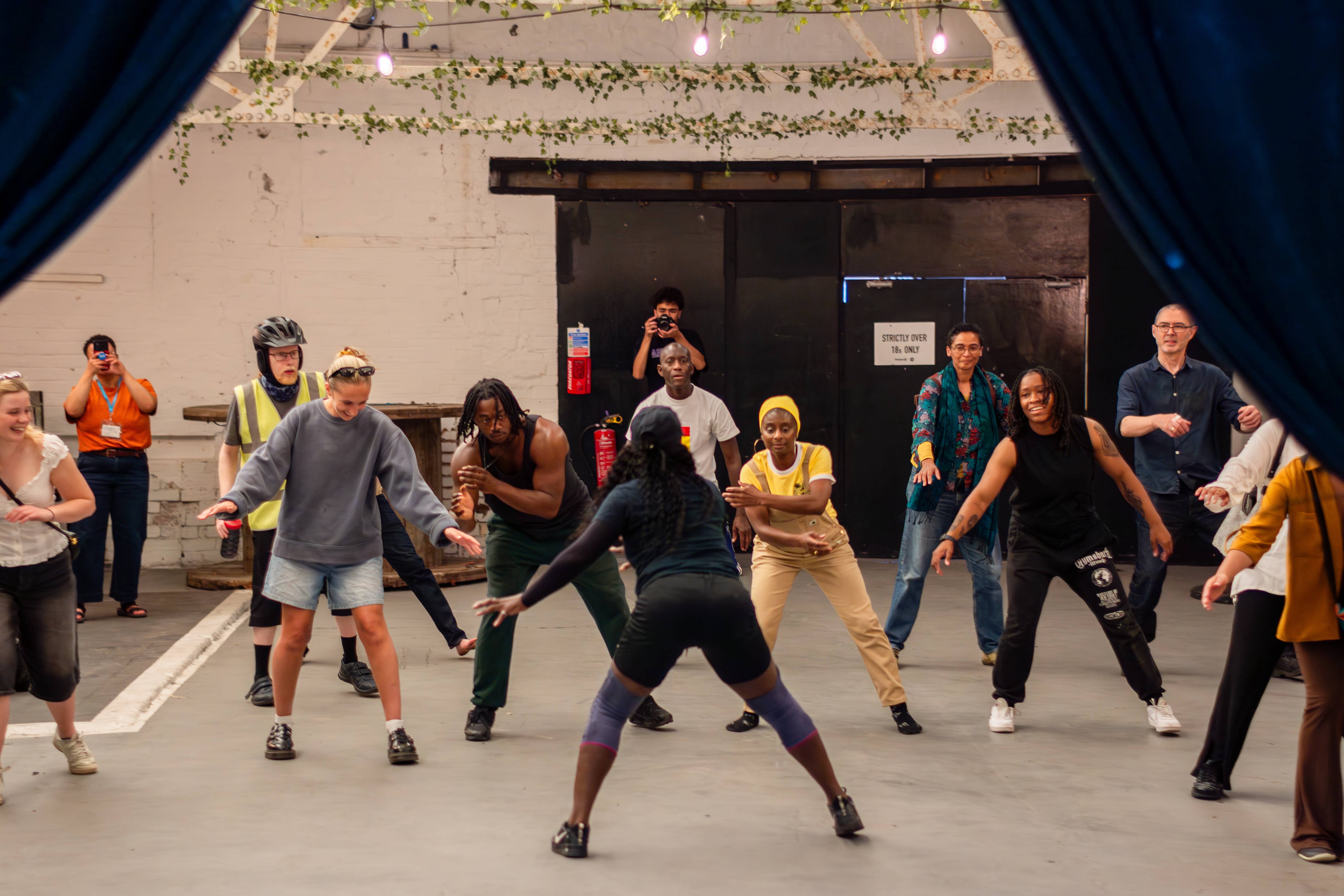
Following on from our first Flatpack Festival event in 2025, "Decolonising Collective Futures through Capoeira”, in 2026 we’ve continued to demonstrate how decolonisation can be practised through reclaiming space, but this time as a filmmaking collective. For this, we screened a selection of short films that we’ve made as a Film Pardna, turning our homes, streets, cemeteries and canals into a film set.
On the surface, the connection between Film Pardna and Capoeira is that they are both practised in the Afroflux studio by crew members. The Afro-Brazillian martial art resonated with us, because when enslaved African Capoeristas in Brazil were displaced during colonisation, they lost their ties and identities to a land mass - and many diasporic communities here in the UK, and members of Film Pardna, resonate with that, and recognise themselves in that story.
We’re at a point in history where we need to find ways to reconnect with the land in order to heal our relationship to it, starting with where we are. In practice, making films and martial arts require us to show up together in a city where we actively have to fight for common spaces to organise, like libraries and community centres, underneath the flags of the far right calling for racial purity. By reclaiming spaces physically and on the screen, we are actively resisting imperial legacies of exclusion, and building our ability to meet the challenges we face by flexing the muscle of organising as a collective, whilst expanding our imagination of what feels possible for us now and in the future.