
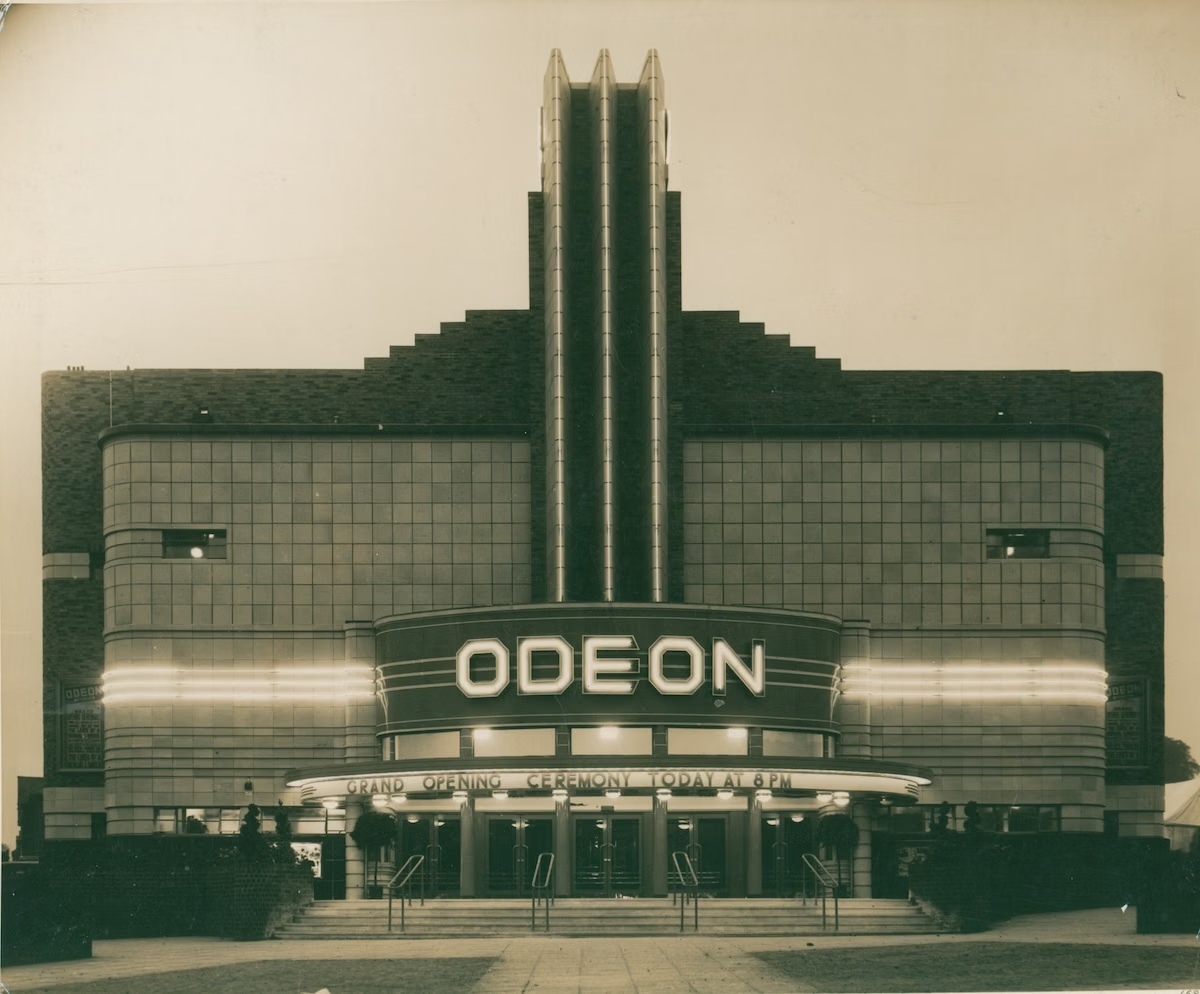
Goodbye, Odeon Kingstanding?
It’s 1 December 1962: closing night at the Odeon Kingstanding.
On the bill is the 1955 film To Hell and Back, starring Audie Murphy as himself. The projectionist tests the negatives, carefully. The Technicolor and CinemaScope stretch the screen deep and wide. The reels turn, until the time comes for the screen to fade to black. The final curtain.
I’m not actually there of course. I’m at the intersection. September 2026 - walking semi-circles around the remnants, most recently a Mecca Bingo, empty since June. The building is increasingly neglected, showing signs of significant deterioration. The estate agents are selling, but the ‘best and final’ deadline has been and gone. The building is stuck between intake and outbreath once again.
And yet, counter-intuitively, every time I return, I witness more of the many qualities that hint at the building’s former life as “one of the flagship venues in Oscar Deutsch’s rapidly expanding cinema circuit.”
The building, occupying an imposing and important site in the area, had an estimated cost of £35,000. Its construction is a testament to the brilliance of Birmingham and Black Country industry, with steelwork from Wednesbury, asphalt roofing from Newhall street, seating and furnishings from Northfield, and plasterwork and decorations from Erdington. In an early indication of the city’s shift towards motorists, the cinema also included a large car park. The intention was that it would attract not only residents of the immediate suburb, but people from all parts of the city and surrounding areas.
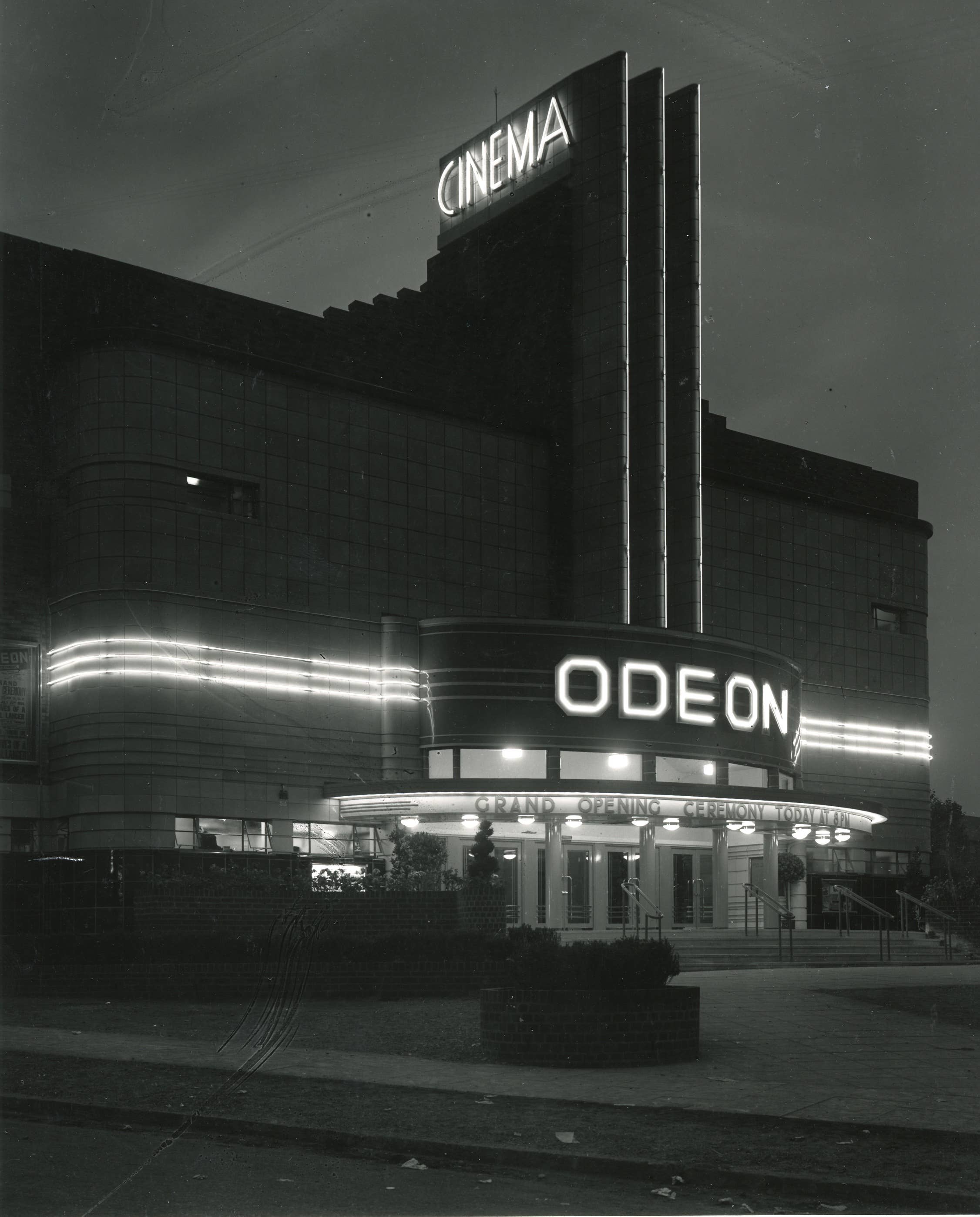
On 22 July 1935, the cinema opened with a screening of Henry Hathaway’s The Lives of a Bengal Lancer. All proceeds from opening night went to the Royal Cripples’ Hospital (now the Royal Orthopaedic Hospital). For those arriving to fill up the 1400 seating capacity the building’s neon fins and faience tiling would have had a huge visual impact. People queued, patiently, in front of its chocolate kiosk and pay box, before running their hands along the chromium plated handrails and locating their seats in the stalls or the circle. As cinema-going grew into one of Britain’s most popular pastimes, the Odeon brought the glamour and wonder of the silver screen into everyday life in Kingstanding.
Oscar Deutsch was in attendance on the night, declaring the Odeon Kingstanding a “well-nigh perfect cinema”.
I wonder who else was in attendance that evening, and what they made of it all. Piecing together images and stories from archives and forums is one thing, but there is so much held suspended and inaccessible in the memories of filmgoers past. And yet, the growing collective tapestry, shared and re-shared by locals, is opening up more and more rooms of cinema history to enjoy and explore.
Today, standing on the balcony, lined with original Odeon seats, you can still get a sense of the original auditorium. The genius of the building, its sheer weightiness, emerges as if infused with remembrance and research.
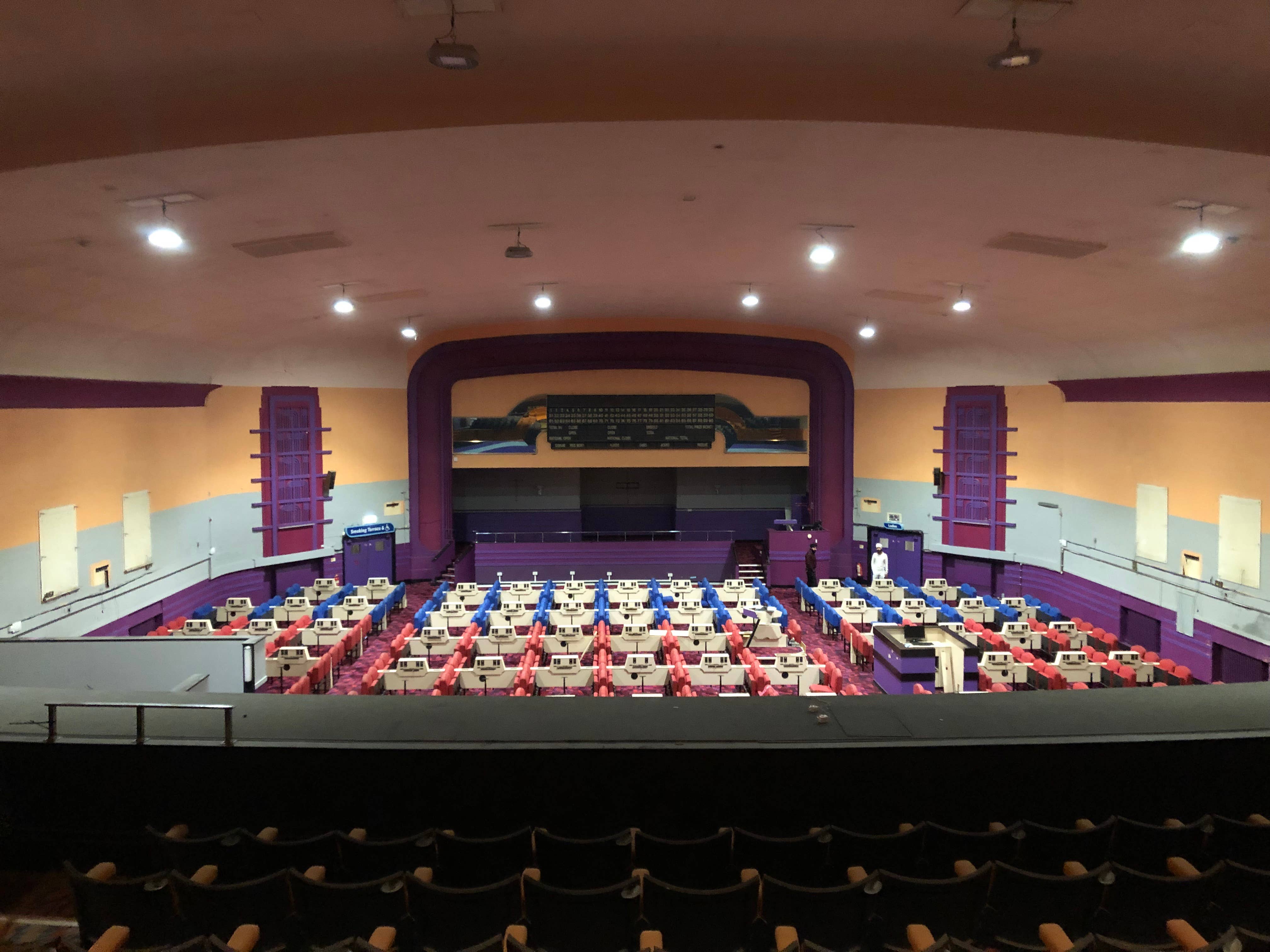
Looking at other images of the empty auditorium, I am reminded of other closures in the city and across the world.
Nick Pinkerton’s book on the film Goodbye, Dragon Inn addresses the loss of the neighbourhood cinema. The subject film, directed by Tsai Ming-Lliang, follows the final hours of the Fu-Ho Grand cinema before its closure. King Hu’s wuxia classic Dragon Inn screens to a dwindling audience. The building is haunted by the ghosts and portents of a culture in flux: we witness things becoming relics, people becoming spectres and films becoming faded.
What is the dance between King Hu and Kingstanding? Throughout the book, Pinkerton speaks of cultural death, fogginess and evaporation. The loss of social spaces where there’s potential for communal artistic experience and chance encounters. A contiguous community existence replaced by the isolation of transit lounge city living, with its constant construction and destruction leading to a prevailing dislocation. Cinemas like the Odeon Kingstanding gave life flow and meaning: they were where you grew up, had fun, were entertained and dreamed together. What has replaced them?
Sometimes it can feel like Birmingham exists in parallel to other places, never getting closer and never getting further away from anywhere. But, in reading Tsai’s film in harmony, the wider story of closure and solidarity helps make sense of the city I live in. Held by art like this, we can reach for a narrative that enables us to stand at the convergence of six roads in Kingstanding, looking at the old Odeon, believing that at least one of those roads leads to a future where it’s still open.
Isn’t that part of why we go to the cinema? To find our humanity, rediscover belief and take time to see the angel in the marble, the city in the concrete. I hope many more people return to the intersection, imagining a slow restoration of the future.
As I walk away, my memory of the building already begins to falter. It only leaves behind what Pinkerton calls, “a faint oily residue in the brainpan”. But perhaps there is something else happening here each time I return. Something more peculiar than memory; a strange hope that feeds my bones where my brain runs out.
The same strange hope that built the place all those years ago.
Written by:
Ben Thomas, co-lead at Screen B14, a not-for-profit community cinema and film collective in Kings Heath, Birmingham. Ben is currently volunteering with Flatpack on Wonderland - a project exploring cinema stories across Birmingham.
References:
Goodbye, Dragon Inn (Pinkerton, 2021).
According to a report in October 1934, the cinema had an estimated cost of £35,000 [The Era, 10 October 1934].
Evening Despatch, published Tuesday, 23 July 1935, page 10